Showing posts with label pass. Show all posts

Monday, June 24, 2024

Perform A Nail Collection DEMO FOR TESTING


 HOW NAILS ARE COLLECTED FOR TESTING demo by expertox


 NEED NAIL DETOX ?

Introducing Naild' It Fingernail Detox, a groundbreaking product designed to cleanse your nails thoroughly for drug testing purposes. Naild' It is meticulously formulated to soften the keratin matrix and deeply penetrate to eliminate any traces of drugs or toxins, ensuring you can confidently pass any nail drug test.

Fingernail drug testing has gained popularity for its precision in detecting drug use over an extended period, ranging from 1 to 5 months. With Naild' It Fingernail Detox, you no longer need to worry about past drug use affecting your test results.

But how does Naild' It Detox achieve this? Utilizing a proprietary preparatory formula, it employs penetrating agents and keratin-softening properties to effectively deliver drug-metabolizing agents into the nail bed. This two-part system involves daily application over a week or more, depending on individual usage history. First, it softens and opens keratin pores, preparing them for the subsequent application of the metabolizing cream. This cream breaks down drug metabolites within the nails, detoxifying them thoroughly for accurate drug testing.

Experience the transformative effectiveness of Naild' It, where clinical precision meets user-friendly detoxification. It's the ultimate solution to prepare for a nail drug test with confidence.

When preparing for your test, ensure you have ample time to remove acrylic nails or grow out your natural nails for clipping. Simply clipping your nails isn't enough; Naild' It ensures thorough detoxification, preventing potential test failures or rescheduled dates due to unprepared nails.

Tuesday, May 9, 2023

Naild' It the solution to how to pass a fingernail drug test


Naild’ It Detox: The Solution for Fingernail Drug Testing

 How to pass a fingernail drug test - Fingernail drug tests detect drug metabolites that become embedded in the keratin structure of the nail as it grows. Because nails grow slowly, substances can remain detectable for 3–6 months, making fingernail testing one of the longest detection methods. Preparation focuses on addressing contamination within the nail matrix rather than dilution methods used for urine testing.


What Is a Fingernail Drug Test?

Drug testing methods continue to evolve. One of the newer and increasingly discussed methods is the fingernail drug test — a procedure designed to detect long-term drug exposure through nail samples.

Unlike urine or saliva testing, nail testing can provide a much longer detection window. During the procedure, a sample is collected either by:

  • Clipping the nail tips (provides a longer historical detection window)

  • Scraping the nail surface (provides a 2–3 month overview of use)

A sample as small as 3 millimeters can potentially reveal drug exposure from approximately 3 to 6 months prior.


How Drugs Become Trapped in Fingernails

Fingernails are composed of keratin, the same structural protein found in hair. When drugs enter the bloodstream, metabolites can migrate into the nail matrix beneath the cuticle. As the nail grows, these metabolites become embedded within the keratin structure.

Key Facts About Nail Drug Detection:

  • Drugs can appear in nails 2–4 weeks after ingestion

  • A 3mm clipping may represent 3–6 months of exposure

  • Combining clippings and scrapings may show up to 6 months of history

  • Toenails may extend detection up to 12 months

  • Nails are approximately four times thicker than hair, potentially capturing higher concentrations of metabolites

Because nails grow slowly and preserve embedded substances, they provide a stable record of drug exposure over time.


Can Trimming Nails Help You Avoid a Nail Drug Test?

Some individuals assume trimming their nails very short will eliminate drug traces. However, this approach often backfires.

If nails are cut too short:

  • Testing personnel may rely more heavily on scraping

  • Scraping can reflect more recent drug exposure

  • Short nails do not eliminate metabolites embedded near the nail matrix

Longer nails (3mm or more beyond the fingertip) typically require less scraping and provide more material from the tips. Additionally, longer nails may be easier to treat with detox products prior to testing.


Introducing Naild’ It Detox

Naild’ It Detox is a two-part nail treatment formulated specifically for individuals facing fingernail drug testing.

Developed by the creators of Hair Razor Detox, a hair metabolite treatment product, Naild’ It extends similar detox principles to nail keratin.

What Makes Naild’ It Different?

Naild’ It is designed to:

  • Target metabolites embedded within nail keratin

  • Utilize oxidizing and metabolizing agents

  • Work through a dual-phase application system

  • Support visible nail clarity and strength


How Naild’ It Works

The Naild’ It Detox system uses a two-step process:

Phase 1: Keratin Relaxation

The first application gently relaxes the nail’s keratin matrix, helping prepare the nail structure for deeper treatment.

Phase 2: Oxidizing & Metabolizing Treatment

The second application introduces active agents intended to break down and neutralize embedded drug metabolites within the nail structure.

The treatment requires multiple applications daily over several days. According to product claims, users may achieve treated nails in approximately one week.


Tuesday, April 13, 2021

Exposing the Propylene Glycol / Aloe Rid shampoo myth


Exposing the Propylene Glycol / Aloe Rid shampoo myth 


The Real History of Nexxus Aloe Rid

More than 15 years after Nexxus Aloe Rid disappeared from the market, most people only know the myths surrounding it. The product was never designed to help someone pass a drug test—it was simply a commercial clarifying shampoo and chelation treatment used to remove product buildup before chemical hair services.

The HISTORY of the  2 part product that you never knew of and how it was

used to create the propylene glycol Aloe Rid myth 

(And how others are still selling commercial aloe shampoo )  


This is a educational informative, historical article / opinion piece. 

Protected by Fair Use 


What Aloe Rid Actually Was

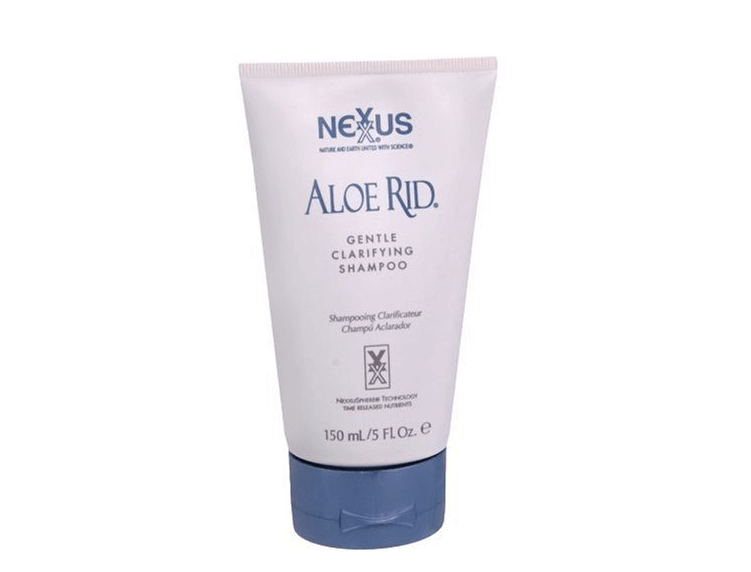
Originally, Aloe Rid was a two-part salon product system sold by Nexxus.

The system included:

1. Clarifying Shampoo

  • Contained about 0.5% EDTA

  • Included Sodium Thiosulfate, often used to remove mineral buildup such as chlorine-related discoloration in swimmers

2. Chelation Treatment Gel

  • Contained roughly 1% EDTA

  • Designed to remove minerals and product buildup before chemical treatments like hair coloring or perming

The key ingredient, EDTA, is a chelating agent used to bind minerals, not drug metabolites.

This system was intended to prepare hair for salon chemical services, not detox hair for drug tests.


Just a Normal Commercial Shampoo

Despite the myths that developed later, Aloe Rid was simply a standard salon product.

It was sold in places like salons and beauty retailers, much like other clarifying shampoos. Its formulation was not dramatically different from many commercial products.

Many clarifying shampoos—including basic brands—contain EDTA or similar chelating agents to remove mineral buildup from hair.

There was nothing about Aloe Rid that gave it any special ability to remove drug metabolites.


How Aloe Rid Became a “Drug Detox” Legend

Around the early 2000s, some companies began repackaging Aloe Rid and marketing it as a hair detox solution.

Early sellers promoted the shampoo through drug test forums and websites, claiming it could help people pass hair drug tests.

Companies such as TestClear, which later marketed products like Toxin Rid, helped spread claims that the shampoo contained special detoxifying ingredients.

One of the biggest myths they promoted involved Propylene Glycol, claiming it was the secret ingredient responsible for removing drug metabolites.

In reality, propylene glycol is simply a common wetting agent used in countless cosmetic products.


The “Old Formula” Marketing Story

When Nexxus eventually discontinued Aloe Rid in the mid-2000s, marketers used the opportunity to push a new narrative.

They claimed:

  • Only the “old formula” worked

  • The new formula was ineffective

  • The old bottles supposedly had higher propylene glycol levels

  • Some even claimed special barcodes identified the real product

These stories had no scientific basis but created a powerful marketing tool.

Sellers began charging extremely high prices for remaining stock, sometimes repackaging or reselling bottles at many times the original retail price.


The Truth About the Ingredients

The primary functional ingredient in Aloe Rid was EDTA, a mineral chelator used in many shampoos.

Meanwhile, propylene glycol—often promoted as the “secret detox chemical”—was simply a wetting agent used in thousands of cosmetic products.

It was never the active ingredient, and it has no known ability to remove drug metabolites from hair.


Key Takeaway

The reputation of Aloe Rid as a “hair detox shampoo” was created by marketing and internet myths, not chemistry.

In reality, it was just a standard clarifying salon product designed to remove mineral buildup before hair treatments, not a miracle solution for passing drug tests.


says old style "aloe rid"  and "pumped from gallons"  with a link to the video mentioned .

 Remember, this batch of product was measured in gallons, so they claimed they needed to pump it from gallon containers to fill plain bottles. That’s how the phrase “pumped from gallons” originated. They even released a video supposedly showing them pumping Aloe Rid Shampoo from gallon containers — but in reality, the video showed a half-gallon jug of the treatment, not the shampoo. To justify why customers were receiving plain bottles with simple labels instead of the branded Nexxus Aloe Rid shown on their website, they included a link to that same video on the bottle. Without such context, the situation could easily be viewed as a bait-and-switch tactic. This is how the now-familiar “pumped from gallons” tagline began and continues to be used today.

a video showing them supposedly pumping aloe rid shampoo from gallons, only it was a half gallon jug of the TREATMENT not the shampoo !!  

 They still show photos of the CLARIFYING TREATMENT GEL (not a shampoo) claiming they pump from gallons of a shampoo that has been out of production for 15 years 


 but then the gallons ran out around 2009.

Not to let a small thing like honesty get in the way the con artist started filling bottles with god knows what, It was  not even the same color as aloe rid and now the brazen con artist put a label on it using the aloe rid trademark . this is called counterfeiting in most courts.


Next, they came up with another scheme, claiming they had acquired a boatload of the original product — supposedly discovering 55-gallon barrels of the special barcode version. (Do barrels even have barcodes?) Later, they claimed to have obtained 5-gallon containers, which I’ve never actually seen.

Their excuse for this is still posted online, stating: “The reason for this is that we bought in bulk for our supply. We have large 1- and 5-gallon containers of Nexxus Aloe Rid, which we use to pump 5 ounces of shampoo into our own generic bottles.”

But here’s the twist: Aloe Rid doesn’t come with a guarantee. And what does that mean? It means the Old Style Aloe Rid — which they say is the only version they carry (notice they never actually say “Nexxus Aloe Rid”) — is shipped in plain 5-ounce bottles and isn’t covered by any manufacturer guarantee or refund policy because it’s no longer produced by Nexxus.

Is it just me, or does this seem deliberately confusing for customers? It feels like a lot of smoke and mirrors to justify selling a 5-ounce bottle of commercial shampoo for over $200.

So what do you call it when a website posts a product image like that?


Show you a video like this 


 But then sends you this ?.... what would you call that? 


Bait and Switch

Some courts have likened initial interest confusion to “bait and switch” tactics, long condemned as a deceptive advertising practice. See Dorr-Oliver, Inc. v. Fluid-Quip, Inc., 94 F.3d 376, 382 (7th Cir. 1996). But the classic bait and switch tactic differs somewhat from trademark infringement.

In the classic initial interest confusion case, the defendant adopts a mark that is similar to plaintiff’s mark. The defendant’s similar mark is used to attract potential customers. Although eventually the customers realize with whom they are dealing, the use of the mark to create an initial attraction to the defendant through the mistaken belief that the defendant is in fact the plaintiff constitutes trademark infringement.


certainly doesnt look like color nexxus aloe rid            but it did have the Aloe Rid trademark font which some courts would call counterfeiting


 trademark infringement

ILL JUST LEAVE THIS HERE FOR YOU TO READ  

15 U.S. Code § 1114.

I(1) Any person who shall, without the consent of the registrant—

(a)
use in commerce any reproduction, counterfeit, copy, or colorable imitation of a registered mark in connection with the sale, offering for sale, distribution, or advertising of any goods or services on or in connection with which such use is likely to cause confusion, or to cause mistake, or to deceive; or
(b)
reproduce, counterfeit, copy, or colorably imitate a registered mark and apply such reproduction, counterfeit, copy, or colorable imitation to labels, signs, prints, packages, wrappers, receptacles or advertisements intended to be used in commerce upon or in connection with the sale, offering for sale, distribution, or advertising of goods or services on or in connection with which such use is likely to cause confusion, or to cause mistake, or to deceive,
shall be liable in a civil action by the registrant for the remedies hereinafter provided. Under subsection (b) hereof, the registrant shall not be entitled to recover profits or damages unless the acts have been committed with knowledge that such imitation is intended to be used to cause confusion, or to cause mistake, or to deceive.


Finally sometime in 2018 we noticed they suddenly changed their name and removed all aloe rid pictures and the pumped from gallons video disappeared....anyone want to guess why they would suddenly drop what some may call a bait n switch trademark infringement counterfeit  scheme ?

 At the same time they suddenly changed their name from aloe rid they used a modified version of a different product name of theirs that matched a URL we  obtained in anticipation of  new products. At first I got triggered as i though they were doing me as they did nexxus. I now know they changed label from aloe rid to T**** just weeks before so its seems to be coincidence both using aloe rid key word.  


 As of Today


The new label no longer displays the trademark-infringing Aloe Rid mark. However, years of marketing confusion have made the name synonymous with the original Nexxus Aloe Rid formula and its well-known propylene glycol myth — a misconception that continues today.

Many people searching for Nexxus Aloe Rid, unaware of the distinction and misled by claims about propylene glycol’s supposed ability to remove drugs from hair, could easily end up buying non-Nexxus Aloe Rid, feeling disappointed or even cheated when they realize the truth. That responsibility lies with the seller spreading the misinformation, not with those exposing it. Legally, this kind of deceptive promotion amounts to contributory negligence.

Even now, the product’s language — phrases like “pumped from gallons” and “old style” — continues the illusion. But old style what? Pumped from gallons of what? Ask them yourself. The new label’s use of “old style” (despite the lack of a “new style”) and “pumped from gallons” suggests it was somehow drawn from gallons of Nexxus Aloe Rid, which could easily be seen as deceptive trade practice


 MACUJO WHO USES THE TIRED OLD PROPLYNE GLYCOL MYTH   


promoting the special barcode nonsense


AGAIN, Propylene Glycol IS NOT A ACTIVE INGREDIENT,( its also at bottom of list because its very weak ) EDTA is the active ingredient and its in all commercial clarifying shampoos.


Propylene glycol is simply a wetting agent — nothing more. Both EDTA and propylene glycol are found in countless commercial shampoos. There’s no proven difference between these products and something inexpensive like Suave Clarifying Shampoo for five dollars, aside from perhaps twenty-five cents’ worth of extra PG.

And as for propylene glycol being supposedly “special”? You can buy an entire bottle of it from a vape supply store for just a few bucks. If you really believe in the PG hype, you could pour some into a large bottle of Suave and end up with the same clarifying effect — actually fifteen times more of it — for about ten dollars.

The truth is, all these “methods” exist to sell shampoos, particularly the Aloe Rid and knockoff versions promoted through so-called detox “methods.” These promotions exist for one purpose: to move shampoo that does nothing on its own. You’re then told to buy another hundred dollars’ worth of household items to “help” the process, making the whole thing a far bigger deception than the propylene glycol myth itself — but that’s a story for another article.


Tuesday, November 3, 2020

WHY ALOE RID SHAMPOO IS NOT FOR DRUG TEST

 WHY ALOE RID SHAMPOO IS NOT FOR  DRUG TEST


To begin, it is important to familiarize yourself with the accurate facts and history surrounding Aloe Rid.

Aloe Rid was originally a commercial shampoo manufactured by NEXXUS and sold between 2000 and 2005 exclusively to salons. It consisted of a two-part treatment: the Aloe Rid Clarifying shampoo and the Aloe Rid Treatment, which was a chelation gel.

The recommended usage involved washing the hair with Aloe Rid Clarifying shampoo, which contained 0.5% EDTA (ethylenediaminetetraacetic acid), followed by the application of the treatment gel, which contained 1% EDTA. The purpose of this treatment was to cleanse the hair and remove buildup from hair products like sprays, gels, and hard water, ensuring clean hair for the purpose of coloring.

It is important to note that Aloe Rid did not remove drug metabolites from the hair. Its primary function was to cleanse the hair and address issues such as "swimmers green" caused by exposure to substances like EDTA. Like any regular shampoo, it could potentially remove some external contaminants and achieve a total reduction of around 30%. However, it was not effective in lowering drug levels below the detection threshold. Contrary to some false claims made on certain websites, the original Aloe Rid formula was not discontinued due to damaging effects on hair or any other exaggerated reasons. It was simply a commercial shampoo sold at salons, similar to other common brands like Suave.

Now, let's delve into the history of the hype surrounding Aloe Rid. In 2005, NEXXUS made the decision to discontinue Aloe Rid from its product line. Initially, they stopped producing it in gallon sizes, followed by quarts. Consequently, those who marketed it for hair detoxification had to find alternative solutions. This is when certain individuals, referred to here as "THE ONES WHO WE DARE NOT MENTION," entered the scene. They propagated the special barcode myth and various other hype surrounding Aloe Rid, including the propylene glycol myth.

To clarify, propylene glycol (PG) is a common ingredient found in numerous products, and its presence or quantity is not particularly significant. It serves as a wetting agent and can be found in many everyday items. Furthermore, a whole bottle of PG costs only around five dollars.

These less than honest individuals continued to display images of genuine Aloe Rid by NEXXUS but sold plain bottles of unknown substances. They made claims about extracting the shampoo from gallons, but a YouTube video they shared actually showed a half-gallon jug of the treatment product, not the gallon-sized shampoo. Moreover, the product they sold did not match the correct color of the original Aloe Rid, but since most people were unaware, they couldn't discern the difference.


Currently, there are several promoters who continue to perpetuate the myth of Aloe Rid through various methods such as the Mac Method, Macujo Method, Gman Method, or Jerry Method. These methods are often used to sell knock-off versions of Aloe Rid or other shampoos that openly admit to not being effective against real drug use. This is precisely why they resort to using damaging substances in an attempt to achieve some reduction, although it is likely to result in hair damage and ultimately fail in achieving the desired outcome.

It is essential to consider the logical aspect of these methods. Their purpose is to sell shampoo, specifically Aloe Rid shampoo and its imitators. However, these shampoos are essentially no different from commercial shampoos like Suave and do not deliver the claimed results. Otherwise, there would be no need for the addition of random ingredients in a futile attempt to make them work.

It is worth asking yourself: Have you ever come across a legitimate laboratory result demonstrating that someone was genuinely heavily contaminated with drugs and then successfully passed a drug test using these methods or shampoos? The answer is likely no because most individuals who utilize these methods are not truly contaminated to begin with. The few instances where someone does pass a drug test after using a method are often shared anecdotally, without any pre-test proof. As a result, such claims cannot be considered as conclusive proof of the method's effectiveness.


METHOD PROMOTERS NEVER SHOW LAB RESULTS

 A PERSON WHO FAILED USING A "ALOE RID "  KNOCK OFF  TO TRY AND TREAT COCAINE  ( YOU CAN NOT TREAT COCAINE LET ALONE ANYTHING OF ANY REAL USE WITH ANY SHAMPOO )

" Used the Aloe Rid shampoo formula 10 times and Zydot ultra clean once, Still failed hair test . See hair confirm test results below "  


MACUJO aloe rid shampoo reviews 


Reviewed in the United States on April 13, 2023
Be careful using this stuff it makes you add all kinds of stuff in your hair like baking soda, clean and clear face wash, tide detergent, and vinegar I ended up getting a chemical burn on my forehead and ears
Reviewed in the United States on April 10, 2023
Says it has a good accuracy but even when using the recommended amount it didnt work. waste of money waste of a product
2 people found this helpful
Report
Reviewed in the United States on June 8, 2022
Look I’ll be honest, the only thing that’ll really clean your hair is something that will alter the hair entirely, by bleaching it, lol this is just some regular perm smelling shampoo, way overpriced. I didn’t even take the chance, just tell your employer before the test that you found another job, and try to reapply later or just flat out stay clean for 3 months, unless you got plenty of time to bleach your hair and then die it back to normal, that still might not be enough. I got it out of fear and later accepted the reality. Didn’t even try to defy science.
2 people found this helpful
Report
Reviewed in the United States on April 18, 2023
Didn't work.
Used for hair test and failed
One person found this helpful
Report
Reviewed in the United States on April 1, 2022
Didn’t even pass my drug test and I did all the extra steps with tide, baking soda, clean n clear and I still failed the hair test for thc. I was so mad! Than the product comes with a label that says no returns ..probably because it doesn’t even work! And the cost of it just to need extra things to use with it is ridiculous. It dried out my hair like crazy and the smell sucks. Worst product ever.
4 people found this helpful
Report
Reviewed in the United States on October 27, 2022
I used Macujo Aloe Rid shampoo for two weeks straight .. I followed the guide on the baking soda and vinegar .. this just does not work and is a waste of time and money. It washed all the color out of my hair but that was about it!
3 people found this helpful
Report
Reviewed in the United States on April 23, 2020
I did the "method" with this shampoo , washed and soaked with vinegar, acne cleanse, aloe rid, tide, at least 15 times even added peroxide soak and the addition cleansing shampoo/ purifier/ and conditioner and I failed my hair test. Luckily i paid for my own hair test before taking a employment test because if I had not , my career would had ended and all college would have been useless bc this generic aloe rid is exactly Generic and does not work what so ever. I highly advise Not buying this product and just cut your hair short and allow it to grow to test length before testing.
12 people found this helpful
Report
Reviewed in the United States on February 3, 2022
This product doesn’t work at all, was using it twice a day for 2 weeks straight, left it on for almost an hour at times, and still failed. Don’t let them take advantage of you too, you might be desperate to pass your test but please don’t waste almost 200 bucks on a product that won’t help you one bit. Wish I didn’t spend my money on this bs.
4 people found this helpful
Report
Reviewed in the United States on April 17, 2022
Followed all the directions that came in the box for Mike's method and it didn't work. This is just another gimmick that will tell you're part of the 1% it cant help.
Reviewed in the United States on June 17, 2022
Didn't work, knew my chances were slim, I followed the directions exactly. Only a 30 day return not 60. $200 and alot of time wasted


 This is why these scampoo sellers say for light thc use only


Hair Razor Detox is the only product that customers send lab results to, some both pre and post to show we really do know how many treatment you need to pass based on YOUR USE HISTORY . 


ANSWER THIS SHORT FORM CONSULTATION SO WE CAN ASCERTAIN WHAT TREATMENT YOU NEED TO  PASS YOUR HAIR FOLLICLE DRUG TEST